Graph Pages: Versatile Graph Paper Templates for Professionals and Creators
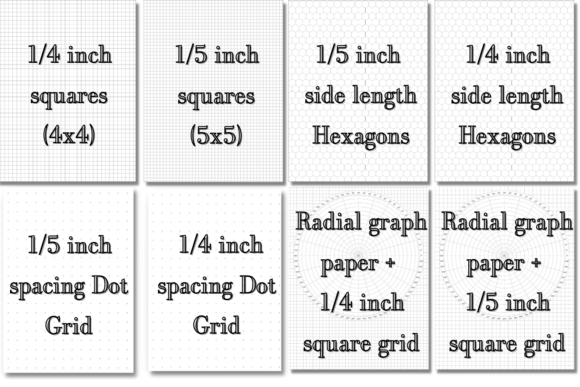
Graph paper has long been a quiet workhorse in fields ranging from engineering to art, but its potential extends far beyond the classroom or the drafting table. Whether you are plotting data, sketching designs, or organizing thoughts, the right grid makes a tangible difference. The collection of Graph Pages PDFs — eight distinct formats covering square grids, circular polar layouts, hexagonal patterns, and dot grids at two sizes each — offers a practical toolkit for anyone who values precision, clarity, and adaptability in their work. Understanding what each format brings and where it fits best can help you choose the right tool for the task at hand.
Why Graph Paper Still Matters in a Digital World
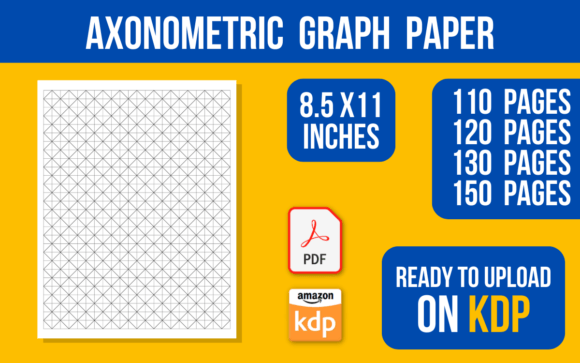
Digital tools dominate modern workflows, but paper remains irreplaceable for certain kinds of thinking. Drawing by hand allows for rapid prototyping, freeform exploration, and a direct tactile connection that screens often interrupt. Graph paper adds structure to that freedom, giving you a reliable spatial reference without imposing rigid constraints. The Graph Pages PDFs are designed to serve this middle ground: they provide consistent, printable templates that work with standard 8.5×11 paper, so you can produce exactly the pages you need, when you need them. Each file contains 120 pages of the same ruling, which means you have a substantial volume for extended projects, classroom use, or ongoing personal notebooks.
Square Grids: The Foundation for Precise Layouts
For most people, the classic square grid is the entry point. The collection includes two versions: one with 0.2‑inch squares (4×4 grid per inch) and another with 0.25‑inch squares (5×5 grid per inch). The 0.2‑inch grid offers finer resolution, making it ideal for detailed sketches, architectural plans, or engineering diagrams where every fraction of an inch matters. The 0.25‑inch grid, with slightly larger cells, works well for general note-taking, graphing linear equations, or sketching floor plans at a comfortable scale. Both are ruled across the full 8.5×11 page, giving you ample drawing area.
A professional drafter might prefer the 0.2‑inch grid for scaled drawings where precision is paramount. An educator teaching algebra or coordinate geometry could use either size depending on the complexity of the problems. For journaling or bullet journals, the 0.25‑inch grid often suits handwriting better, as the cells align neatly with most pen strokes. Having both sizes available means you can match the grid density to your specific task without compromising on accuracy or readability.
Circular Polar Graph Paper: Navigating Angles and Radial Data
Circular polar graph paper is a specialized format that becomes indispensable when working with angular measurements, directional data, or radial patterns. The Graph Pages PDFs include two polar variants: one with 0.2‑inch square ruling and a maximum circle diameter of 7.60 inches, and another with 0.25‑inch squares and a 7.50‑inch maximum diameter. Both are marked every 1, 5, and 15 degrees from 0 to 360, with radius increments of 1/5 inch (0.2‑inch version) or 1/4 inch (0.25‑inch version).
This level of granularity makes these sheets suitable for plotting wind rose diagrams, antenna radiation patterns, directional survey data, or even mandala-like art designs. Engineers and geographers frequently need to visualize data in polar coordinates, and having a pre-printed template saves hours of manual construction. The concentric circles and radial lines are cleanly printed, so you can focus on the data rather than on drawing guides. If your work involves anything from navigation to acoustics to radar mapping, these polar grids offer a reliable reference that digital tools often replicate poorly on paper.
When choosing between the two sizes, consider the scale of your data points. The 0.2‑inch version with finer radius steps is better for dense, high‑precision plots, while the 0.25‑inch version gives a bit more visual breathing room for annotation and reading values at a glance.
Hexagonal Graph Paper: Organizing Space Differently
Hexagonal grids solve problems that square grids cannot. Because hexagons pack more efficiently in terms of adjacency — each cell shares edges with six neighbors instead of four — they are ideal for mapping connectivity, resource allocation, or any system where distance and proximity matter equally. The Graph Pages collection includes hex grids with 0.2‑inch and 0.25‑inch side lengths, both on standard 8.5×11 pages.
Game designers often use hex grids for strategy maps where movement and line-of-sight calculations are simplified by the uniform neighbor distances. Biologists and chemists use hexagonal layouts to represent molecular structures or crystal lattices. Urban planners sometimes prefer hex grids for spatial analysis because they reduce distortion in certain kinds of density calculations. Even artists and quilters find hexagon patterns useful for tessellation and repeating designs.
The 0.2‑inch hexagons allow for more cells per page, which is helpful when working on larger systems or when you need fine-grained placement. The 0.25‑inch hexagons are easier to write in and read, making them a good choice for brainstorming sessions or concept mapping where legibility is key. Having both sizes means you can switch between a detailed, high‑density layout and a more spacious, annotation‑friendly format without switching tools entirely.
Dot Grid Paper: Structure Without Visual Clutter
Dot grid paper strikes a balance between complete freedom and gentle guidance. The dots mark regular intervals — 0.2 inches or 0.25 inches apart — without drawing full lines across the page. This creates a subtle framework that supports alignment, symmetry, and measurement while keeping the page visually clean. The Graph Pages PDFs provide both densities, each with 120 pages of consistent dot spacing.
For writers, bullet journalists, and UX designers, dot grids are a popular choice because they allow for flexible layouts: you can draw tables, sketch wireframes, write in straight lines, or create custom graphs without fighting visible grid lines. The 0.2‑inch spacing works well for small handwriting or detailed sketches, while the 0.25‑inch spacing accommodates larger text and more generous spacing between elements. If you teach or present material that involves diagrams, dot grids let you produce neat illustrations without the distraction of a full grid. They also photocopy and scan cleanly, which matters if you plan to digitize your notes later.
Practical Recommendations for Choosing the Right Format
Each of these eight PDFs serves a distinct purpose, but many projects benefit from having a mix on hand. If you are assembling a binder for a long‑term project, consider including both square and dot grids for different phases of work: use the square grids for precise drafting and data plotting, then switch to dot grids for creative brainstorming or meeting notes. The polar and hex grids are more specialized, but they can be indispensable when the task requires them.
For educators, the variety allows you to tailor handouts to specific lessons. A math teacher might use square grids for coordinate geometry, polar grids for trigonometry or complex numbers, and hex grids for discrete mathematics or game‑based learning activities. Artists and designers can experiment with the different patterns to find the one that best supports their current style — some prefer the rigidity of squares, others the organic feel of hexagons, and many appreciate the minimalism of dots.
One practical consideration is that all these pages are formatted for 8.5×11 paper, which is standard for most home and office printers. The 120‑page count per file gives you a substantial supply, but you might also choose to print only a handful of pages at a time for specific tasks. Because each PDF contains a single ruling repeated throughout, you can easily print a few pages for a quick project without wasting paper.
Limitations and Fit Considerations
While these templates cover a broad range of needs, no single collection can suit every possible use case. The polar grids, for instance, are designed for manual plotting; if you require highly precise digital output or automated data visualization, dedicated software may be more efficient. Similarly, the hex grids assume a regular, flat‑topped or pointy‑topped orientation; certain specialized applications may need a different alignment or cell shape. If your work involves extremely large or extremely small scales, you might need custom grid spacing beyond the 0.2‑inch and 0.25‑inch options offered here. It is worth evaluating your typical projects against the available sizes to confirm a good match.
Another factor is paper thickness and print quality. These PDFs are designed to be printed on standard printer paper, but if you plan to use markers, watercolor, or heavy ink, you may want to test a single page first on your chosen paper stock to ensure the grid lines remain crisp and the dots do not bleed. The files themselves are clean and high‑contrast, so the limiting factor is often the printing medium rather than the template design.
Who Benefits Most From This Collection
Professionals in technical fields — architects, engineers, surveyors, data analysts — will find the square and polar grids directly applicable to daily work. Creatives such as illustrators, graphic designers, and quilters can use the hex and dot grids for pattern design, layout planning, and color studies. Entrepreneurs and small business owners who run workshops or produce educational materials can print these pages in bulk for handouts, workbooks, or planning sheets. Bloggers and content creators who share printable resources or study guides will appreciate having a ready‑made set of high‑quality templates to offer their audience.
Freelancers and remote workers often juggle multiple roles, and having a versatile set of graph papers in your toolkit means you are never caught without the right grid when a quick sketch, a chart, or a project plan needs to take shape on paper. Even for personal use — tracking habits, designing a garden layout, or learning to draw in perspective — these pages provide a low‑cost, high‑value resource that adapts to your changing interests.
Final Thoughts on Building a Graph Paper Library
A well‑chosen set of graph paper templates is more than a collection of grids; it is a practical infrastructure for thinking, planning, and creating. The Graph Pages PDFs offer a coherent system of eight formats that cover the most commonly needed ruling patterns at two useful scales each. Whether you are laying out a technical drawing, mapping a wireless network, designing a board game, or simply taking structured notes, having the right grid at hand reduces friction and lets you focus on the work itself.
Consider your typical projects and identify which patterns would add the most value to your workflow. You might find that one or two formats handle 80 percent of your needs, while the others become essential for specific tasks. The beauty of this collection is that it gives you the freedom to choose — and to change your mind as your work evolves. Print a few pages of each, try them out, and let your own use cases guide you toward the formats that fit best.