Building a Professional Autograph Log Book KDP Interior for Your Publishing Workflow
For independent publishers and creators building a catalog on Amazon KDP, the interior file is more than just pages—it is the tangible core of a physical product. The Autograph Log Book KDP Interior provides a structured, 120-page canvas designed specifically for efficient print-on-demand production. To use it effectively, you need to understand where this asset fits into your broader planning, production, and marketing workflow. This article examines the practical process of working with this interior file, from your initial preparation to long-term catalog management.
Understanding the Autograph Log Book KDP Interior as a Production Asset
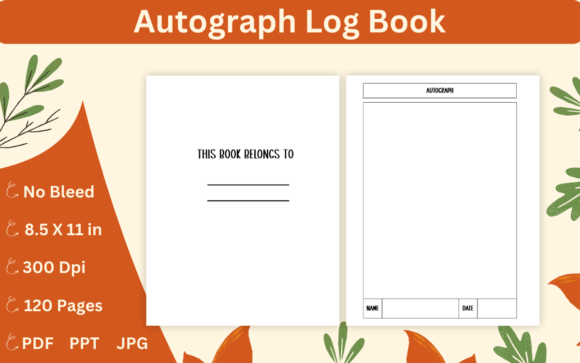
The Autograph Log Book KDP Interior is a collection of formatted files—PDF, PPT, and JPG—optimized for a black and white 8.5x11 inch paperback. It functions as a bridge between a content idea and a marketable product. The specifications, including 300 DPI resolution, no bleed settings, and a 120-page count, are chosen to meet Amazon’s technical requirements while minimizing friction during upload.
In practice, this interior interacts directly with three core areas of your work:
- Your design environment: You will use the editable PPT file to customize headers, prompts, and page structures before export.
- The KDP platform: The PDF file is formatted to fit Amazon’s trim and bleed guidelines, simplifying the setup process.
- Your marketing process: The JPG template files allow you to create realistic preview images for social media and advertising.
Recognizing these interactions helps you move from concept to published book in a structured, repeatable way.
Pre-Production: Preparing the Interior for a Smooth Upload
Before you generate a final PDF, the preparation phase determines how efficiently the rest of your workflow will run. The editable PPT file is the primary tool for this stage.
Customizing the Page Structure
You can modify the PPT file to add specific fields tailored to your target audience. For example, you might include dedicated spaces for the signer’s name, the date, a location, and personal notes. The goal is to enhance the usability of the log book without overcomplicating the layout. Because the file is fully editable, you can experiment with different arrangements before committing to a final version.
Checking Technical Compatibility
The PPT file is compatible with Microsoft PowerPoint, Google Slides, and Apple Keynote. This flexibility is important if you work across multiple devices or collaborate with a team. Before you begin customizing, test that fonts, alignment, and page dimensions carry over correctly in your chosen software.
Understanding the No Bleed and DPI Settings
A critical step in preparation is confirming your export settings. The Autograph Log Book KDP Interior is designed with a no bleed specification, meaning you do not need to extend background elements beyond the trim edge. This simplifies the KDP upload process because you can select the “No Bleed” option directly in the platform. Similarly, the 300 DPI resolution ensures that lines and text remain crisp when printed. Always validate that your export matches these parameters before moving to production.
Planning for the Page Count
The 120-page count is intentional. For an 8.5x11 inch book, this number of pages produces a spine wide enough to allow visible text on the shelf, which is a practical advantage for branding. It also gives end users a substantial book that feels complete without being overwhelming. During preparation, you can decide whether to fill all 120 pages with log templates or include introductory pages, a table of contents, or a closing note.
Production: Executing the File Assembly
Once your preparation is complete, the production phase focuses on assembling the final PDF. This is where the editable PPT file and the JPG templates serve distinct purposes.
Using the PPT File for Bulk Editing
Because the interior contains 120 pages, manual editing of each page would be inefficient. Instead, work with the PPT file’s master slides or reusable templates. Apply consistent formatting across all pages at once. For example, you can update a header on the master slide and have it propagate through every log page. This approach enforces consistency and reduces the risk of formatting errors.
Leveraging JPG Templates for Quality Checks
The JPG template files are useful for rapid visual testing. Export a few pages as images and review them at actual size. This helps catch alignment issues, font rendering problems, or spacing inconsistencies before you generate the final PDF. You can also use these same JPG files as mockup assets for your product listings, saving time later in the workflow.
Quality Control Before PDF Export
Examine your assembled interior for the following:
- Font embedding: Ensure all text is either embedded or converted to paths to prevent substitution errors during print.
- Page order: Verify that your 120 pages are in the correct sequence, especially if you added introductory or supplementary pages.
- Line consistency: Check that all signature lines, borders, and prompts are uniform in weight and style.
- Ink usage: Since the interior is black and white, confirm that no stray colors or grayscale elements have been introduced accidentally.
Taking the time to run these checks during production reduces the likelihood of needing a correction after the book is live.
Post-Production: Marketing and Long-Term Maintenance
After you upload the final PDF to KDP and the book is published, the Autograph Log Book KDP Interior continues to support your workflow through its supplementary file formats.
Repurposing Templates for Marketing
The JPG files become a resource for creating social media content. You can quickly crop individual pages to show the layout quality, create before-and-after comparisons of your customization, or generate video previews. Because the files are already rendered at 300 DPI, they maintain sharpness even when displayed on high-resolution screens.
Managing Updates and Revisions
If you need to correct an error or update a design element, the editable PPT file allows you to make changes without starting from scratch. Open the file, apply the fix, re-export the PDF, and upload the revised version to KDP. This process can be completed in a focused session, which is particularly valuable if you manage multiple titles and need to preserve your time.
Building a Series from One Interior
You can use the original PPT file as a master template for a series of related log books. For example, if you publish a sports autograph edition, a celebrity edition, and a general keepsake edition, maintaining a consistent layout across all three builds a professional brand image. Each iteration requires only small text and prompt changes within the same structural framework.
Practical Workflow Integration Example
Here is an example of how an independent publisher might use the Autograph Log Book KDP Interior across a single week:
- Monday – Preparation: Open the PPT editable file. Customize the header to “Personal Autograph Collection” and add fields for date, event, and notes. Duplicate the log page template until you have 120 pages.
- Tuesday – Testing: Export the first 10 pages as JPG files using the provided templates. Review them on screen and share with a collaborator for feedback.
- Wednesday – Final Assembly: Apply final adjustments to the PPT file. Export the complete PDF at 300 DPI with no bleed settings.
- Thursday – Upload: Log into KDP, set the trim size to 8.5x11, select black and white interior, and choose no bleed. Upload the PDF and run the internal previewer to verify every page.
- Friday – Marketing: Use the JPG templates to create an image showing a double-page spread. Schedule posts across your social channels linking to the product listing.
This workflow leverages each file format for a specific purpose, turning the interior asset into a tool that supports the entire publishing cycle.
Key Considerations for Usability and Quality Control
Integrating the Autograph Log Book KDP Interior into your process requires attention to a few ongoing factors.
Preparing for User Experience
The 8.5x11 inch size provides ample writing space for end users. Because the interior is black and white, printing costs remain low, which allows you to price the book competitively while maintaining your royalty margin. The clean, uncluttered layout respects the user’s need for structure without introducing distractions.
Maintaining Consistency Across Your Catalog
If you publish multiple log books, using the same underlying interior file establishes a recognizable style. Readers who purchase one of your books will know what to expect in terms of quality and layout. This consistency supports trust and encourages repeat purchases.
Longevity and Relevance
The autograph log concept is a functional product that does not rely on trends. A well-designed interior file remains relevant for years, making it a stable asset in your publishing portfolio. The 120-page count ensures the book has a visible presence on Amazon, while the no bleed specification means you can re-upload the same file to different marketplaces without reformatting.
Organization and Workflow Discipline
Store your PPT, PDF, and JPG files in a structured cloud folder. Maintain separate directories for working files, final exports, and marketing assets. This simple organizational habit prevents confusion when you return to a project after months of inactivity. Because the Autograph Log Book KDP Interior provides multiple file types, each one should have a designated role in your process to avoid redundancy and clutter.
By treating this interior as part of an integrated workflow rather than a static file, you gain efficiency, consistency, and a clearer path from idea to published product. The combination of an editable PPT, a print-ready PDF, and flexible JPG templates gives you the control needed to produce a professional book while adapting to the practical demands of the KDP marketplace.