Address Lok Book – KDP Interior: A Practical Guide to Getting It Right
If you have spent any time exploring Amazon KDP, you already know that the interior of a book matters just as much as the cover. A well-designed interior makes the difference between a product that looks professional and one that feels thrown together. The Address Lok Book – KDP Interior is one of those ready-to-use templates that can save you hours of layout work, but only if you use it correctly. Many people download a file like this, upload it quickly, and wonder later why the results look off or why customers leave feedback that mentions awkward spacing or missing fields. Let us walk through what this product actually offers, where people tend to make mistakes, and how you can avoid those pitfalls whether you are publishing on KDP or printing for your own daily use.
What the Address Lok Book – KDP Interior Actually Includes
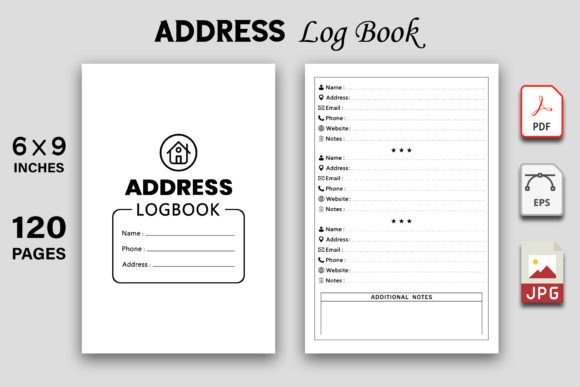
This interior template comes in three formats: JPG, PDF, and EPS. The dimensions are 6 inches by 9 inches, which is a standard size for notebooks, address books, and journals on Amazon. It has 120 pages, and the files are described as 100 percent editable and high-quality print ready. For someone starting a KDP business, that combination is appealing because it removes the need to build a layout from scratch. You open the file, make your adjustments, and upload. The EPS format gives you vector flexibility if you want to scale elements or customize artwork. The PDF is already formatted for Amazon’s upload requirements. The JPG files can be useful for previews or simple tweaks.
But here is the nuance: “editable” does not mean the same thing in every format. If you open the EPS in a vector program like Adobe Illustrator or Affinity Designer, you will have full control over every element. If you open the PDF in a standard reader, you likely cannot edit much at all. Knowing which format to use for which task is the first step toward avoiding wasted time.
Common Mistake Number One: Overlooking the Editable Nature of Each Format
A frequent misunderstanding happens when someone downloads the PDF and assumes they can open it in a free PDF viewer and start changing text or fields. That is not how print-ready PDFs work. The PDF included with this interior is designed for direct upload to KDP. It is flattened for printing, meaning all fonts, images, and layout elements are locked in place. If you try to edit that PDF, you will struggle or you may damage the layout.
What to do instead: Use the EPS file if you need to make edits before finalizing. Import the EPS into a vector editing program, make your changes, then export a fresh PDF for uploading. If you do not have access to vector software, the PDF can still be used exactly as is — which is perfectly fine if the layout already meets your needs. Many people overlook the fact that they do not need to edit anything at all. The template is ready, so if the design matches your vision, upload it directly.
Why People End Up with Misaligned Pages or Cut-Off Content
Another issue that appears regularly involves the 6 by 9 inch dimensions. That size is standard, but KDP requires specific margins and bleed settings depending on the number of pages and the type of book. The Address Lok Book interior comes with 120 pages, which is within the range where KDP allows both black and white and color interiors, but the margins need to be respected. If you open the file and shift elements around without keeping the safe zone in mind, content near the edges may get trimmed during printing.
I have seen people move text fields closer to the edge because they wanted a more spacious look, only to receive proof copies where addresses were partially cut off. That is frustrating and expensive to fix. Always keep all important content at least a quarter inch away from the trim edge. The template likely already respects that, so if you are not editing, you are safe. If you do edit, keep that boundary in mind.
Misunderstanding the Purpose of the JPG Files
The JPG files that come with this interior are useful, but not for uploading directly to KDP as the main interior. JPG is a raster format, meaning it is made of pixels. If you try to upload a JPG version of a 120-page book to Amazon, you will run into resolution issues, file size problems, and a lack of sharpness when printed. The JPG files are better suited for previewing the layout on screen, sharing a sample with a client, or using in promotional material.
Some people mistakenly think they can use the JPG files as the actual book interior because they are included in the package. That leads to poor print quality and disappointed customers. The correct workflow is to use the PDF for KDP upload and the EPS for any custom edits. The JPG files are a bonus, not the main tool.
Neglecting to Test the Template Before Publishing
One of the most practical pieces of advice I can give you is to order a physical proof copy before you hit publish. Even though the Address Lok Book interior is described as print ready, every printer handles files slightly differently. Paper quality, ink absorption, and binding methods vary. A proof copy lets you see exactly how the addresses will appear in real life. You can check whether the fields are large enough for handwriting, whether the paper weight feels good, and whether the spine allows the book to lie flat.
Skipping this step is common among beginners who want to get their book live quickly. But a single customer review that mentions the fields are too small for writing can kill your listing. Spend the small amount of money on a proof. It will save you from larger problems later.
Using the Template for Purposes It Was Not Designed For
The Address Lok Book is an address book interior. That sounds obvious, but I have seen people try to repurpose it as a general journal, a logbook for inventory, or even a recipe book. The layout has specific sections intended for names, addresses, phone numbers, and emails. If you try to force a different use case, you will end up with awkward blank spaces or mismatched field labels. The interior works best when used as intended: a personal or professional address book for contacts. If that fits your project, you are in good shape. If you need something different, look for a template that matches your actual use case rather than trying to retrofit this one.
Overlooking the EPS File as a Vector Resource
The EPS format is the most versatile file in the package, yet many people never open it. If you have basic vector editing skills, you can adjust colors, resize elements, add your own branding, or even change the labeling on the fields. This is especially valuable if you want to create a branded giveaway for clients or a customized address book for a specific group, such as a real estate agent providing them to homebuyers or a small business owner giving them as year-end gifts.
If you do not know how to use vector software, you can still use the PDF as is. But if you ignore the EPS file entirely, you are leaving potential value on the table. Take a few minutes to open the EPS and see what you can do with it. Even a small tweak, like changing the color of the header, can make the book feel more personal and professional.
What to Check Before You Download or Buy
Before you commit to this interior, ask yourself a few questions. First, do you need exactly 120 pages? That is a good length for a personal address book, but if you are planning a larger directory, you might need a template with more pages. Second, are you comfortable with the 6 by 9 inch trim size? That size is portable and fits nicely on a desk, but it is not the only option. Third, do you have the software to handle EPS files if you plan to edit? If not, and the PDF does not quite meet your needs, you may be better off with a fully editable format like DOCX or INDD.
Also check the licensing terms. Most KDP interiors allow commercial use, meaning you can publish the book for sale. But some have restrictions on reselling the template itself or using it in certain types of products. The description here indicates it is perfect for starting a KDP business, which suggests commercial use is allowed. Still, it is wise to read the specific terms from the seller so you know exactly what you are allowed to do.
Why This Template Works Well for Beginners and Professionals Alike
For someone just starting a KDP business, the Address Lok Book interior removes the steep learning curve of layout design. You do not need to worry about margins, bleed, or page count calculations because those are already handled. You simply add your cover, upload the PDF, and publish. For professionals, the EPS file gives the flexibility to customize while still starting from a solid foundation. That balance is rare in many templates. You either get something that is locked tight and cannot be adjusted, or something that is so loosely structured that you end up fixing more than you create. This interior sits in a useful middle ground.
Practical Recommendations for Getting the Best Result
Start by opening the PDF and reviewing every page. Make sure the layout feels right for your audience. If you are targeting older adults who prefer larger handwriting spaces, check that the address fields are comfortably sized. If the fields feel tight, use the EPS file to enlarge them before exporting. Next, test the file by uploading it to KDP as a draft. Amazon will check for font issues, missing pages, or formatting problems. Fix any warnings before you order a proof. Finally, once you are satisfied with the proof, publish with confidence knowing that the interior is consistent and professional.
If you plan to print this for your own daily use rather than selling it, the same steps apply. Print a single copy first, test it with a pen, make sure the paper type works well with your preferred writing instrument, and then proceed with a larger print run if needed. The template is designed for both scenarios, but only if you take the time to verify the output.
Final Thoughts on Using the Address Lok Book – KDP Interior
This interior is a solid option for anyone who needs a clean, functional address book layout without starting from zero. The mistakes that happen with it usually come from not understanding the differences between the file formats, ignoring the importance of margins, or skipping the proofing process. All of those are easy to avoid with a little attention up front. Whether you are publishing on Amazon KDP as part of a new business or printing a batch of address books for personal organization, the template gives you a reliable foundation. Use the right file for the right job, respect the print boundaries, and always test before you commit. That approach will save you time, money, and the frustration of a final product that does not meet expectations.