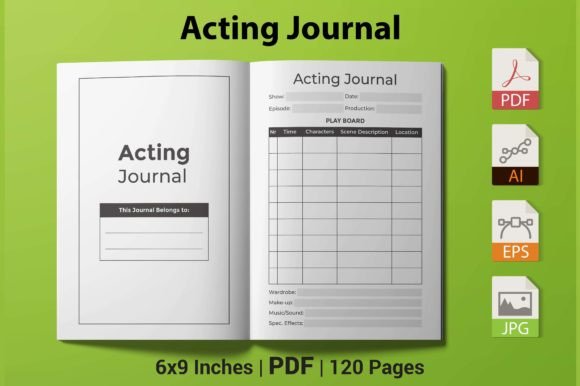
Acting Journal – KDP Interior: A Practical Guide to Choosing and Using the Right Template for Your Amazon KDP Publication
If you are preparing to publish an acting journal on Amazon KDP, you have likely come across the Acting Journal – KDP Interior option. This ready-made interior file is designed to help actors record their rehearsals, character work, audition notes, and performance reflections. But before you hit download and upload, there are several practical details that can make the difference between a professional-looking book and a frustrating experience. Many creators skip over crucial specifics, only to run into problems later. This guide walks you through the common mistakes, misunderstandings, and overlooked details so that you can use this interior confidently and efficiently.
What Exactly Is an Acting Journal KDP Interior?
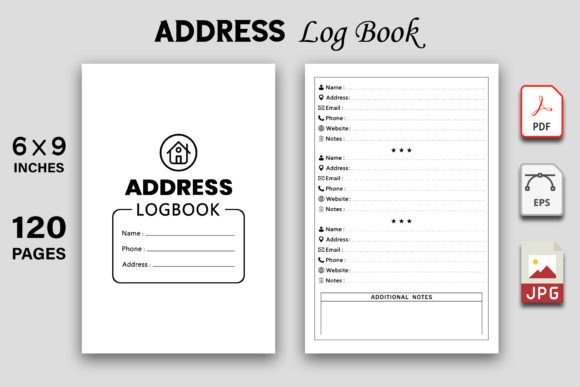
An Acting Journal KDP Interior is a pre-designed set of interior pages (typically in PDF, AI, EPS, and JPG formats) that you purchase and download instantly. It is meant to be uploaded as the content of your paperback or hardcover book on Amazon KDP, after you design your own cover separately. The interior includes structured pages for journaling, with prompts, sections for character analysis, scene notes, and goal tracking. The example we focus on here comes in three page-count variations: 100, 110, and 120 pages. It is formatted for a 6×9 inch trim size with no bleed, and the PDF file is already print-ready for KDP guidelines.
Why would someone choose this? For actors, coaches, or drama teachers who want to produce a printed journal quickly without designing every page from scratch. For KDP publishers who want a niche product that addresses a specific audience. The interior saves hours of formatting work, but only if you understand how to select and use it correctly.
Common Mistake #1: Overlooking the “Interior Only” Limitation
A recurring misunderstanding is that an “interior” product includes a cover or that it automatically becomes a complete book. In reality, the Acting Journal – KDP Interior is strictly the inside pages. You are responsible for creating your own front and back covers. Many beginners upload the PDF alone, forgetting that they need a separate cover file. This leads to rejections from KDP or a book that looks unfinished.
How to avoid this: Before purchasing, have a plan for your cover. You can design it yourself using tools like Canva or Adobe Express, or hire a freelance designer. Ensure your cover matches the 6×9 inch size and uses the same theme as the interior. The seller usually provides the AI, EPS, and JPG files precisely so that you can edit and adapt the interior elements for your cover design if needed.
Mistake #2: Choosing the Wrong Page Count for Your Needs
The interior is offered in 100, 110, and 120 pages. These numbers refer to the total page count of the book. But some creators mistakenly choose the highest count thinking “more is better,” without checking whether the layout actually fills those pages meaningfully. An Acting Journal should have enough space per entry—if the journal includes dated pages or multiple prompts per page, a 120-page book might feel sparse if you only need 80 pages of content. Conversely, a 100-page book might be too short for actors who want a year-long journal.
Better approach: Consider your target actor’s usage. A beginner actor might prefer a smaller, less intimidating journal (100 pages). A professional actor or a coach using it for group workshops might need the 120-page version. Also, note that KDP printing costs increase with page count, so your royalty margin will differ. Preview the interior sample, if available, to see how many entries fit per page. Then select the count that matches the intended duration and depth of use.
Mistake #3: Ignoring the “No Bleed” Requirement
The file is specified as no bleed. This means the content does not extend to the edge of the page; there are white margins. Some publishers try to upload it as is, but then during KDP’s review, they get warnings about content being too close to the trim edge or they inadvertently switch to “bleed” settings in the upload process. This creates a misalignment in the final printed book.
Practical advice: When you upload the PDF to KDP, make sure you select the “no bleed” option in the paperback setup. Also, do not attempt to edit the file to add a bleed effect unless you are experienced with InDesign or Illustrator. The interior is designed for no-bleed printing, and using it correctly ensures that margins remain consistent. If you want a full-bleed image on any page, you would need to customize the AI or EPS files, but that is an advanced step.
Mistake #4: Not Checking File Format Compatibility
The product includes PDF, AI, EPS, and JPG files. The PDF is ready for KDP, but many people assume they can edit the PDF directly. In reality, editing PDFs can be difficult and often results in degraded quality. The AI (Adobe Illustrator) and EPS files are vector-based and fully editable if you have proper software. The JPG files are likely previews or low-resolution thumbnails.
How to avoid format frustration: If you plan to customize the journal—changing prompts, adding your own headers, or translating it—use the AI or EPS files. You will need Adobe Illustrator or a compatible vector editor (like Affinity Designer or CorelDRAW). If you only need the journal as is, upload the provided PDF directly. Do not try to resize or transform the JPG files, as they may lose resolution. The high-resolution interiors are in the vector files and the PDF.
Mistake #5: Assuming the Product Is One-Size-Fits-All Without Reviewing Content
Not all acting journals are created equal. Some interiors focus heavily on monologue preparation, while others emphasize daily accountability logs. The specific Acting Journal – KDP Interior you choose may have sections for scene rehearsal, character background, audition tracking, and weekly reflections. But if you do not download the preview or read the description carefully, you might end up with prompts that do not fit your audience’s needs. For example, a journal designed for stage actors might not be optimal for film actors who need a different kind of blocking and continuity logging.
Better check: Look at the sample pages. Count how many prompts per page there are. See if there are enough blank pages for free writing. Consider whether the journal’s structure encourages consistent use or becomes repetitive. If you are a blogger or educator planning to sell this journal to acting students, you might need a version that includes goal-setting pages and space for feedback from instructors. If the interior lacks those, you can edit the AI file to add them—but that requires skill. Alternatively, you can search for another interior that better matches your niche.
Mistake #6: Forgetting About Trim Size Consistency with Cover and Margins
The interior is 6×9 inches. That is a common paperback size, but it must match your cover exactly. Some designers create a cover at 6×9 inches, but then they add an extra spinoff for the spine and back cover, which is correct. However, a more subtle mistake is not aligning the interior margins with the cover. If your cover has a background that bleeds but your interior is no-bleed, the transition from cover to first page may look odd. Also, KDP’s cover template includes safety margins, so ensure that any text or important elements on the spine are within safe zones.
Advice: Use the KDP cover calculator to generate a cover template that matches the number of interior pages. For a 100-page book, the spine thickness is different than for 120 pages. The interior page count directly affects the spine width. Many KDP publishers forget this and end up with a cover that does not wrap correctly. So, decide your page count first, then design the cover.
Mistake #7: Neglecting to Check the Resolution and Print Readiness
The listing claims “high-resolution interiors and all are print-ready.” But “high resolution” can be ambiguous. For KDP, images and graphics should be at least 300 dpi. Text should be embedded fonts that are royalty-free. Some interiors use common fonts, but if a font is missing or not embedded, KDP may reject your file. Also, raster images in JPG format might be low quality after compression.
How to verify: Before purchasing, ask the seller or check the product description for font details. If the interior includes any icons or decorative elements, ensure they are vector-based (in the AI or EPS files) so that scaling does not hurt quality. When you receive the PDF, open it and zoom to 200-300% to see if edges remain sharp. Also, run a quick test upload to KDP’s previewer (though you may not be able to fully test without buying). If something looks off, contact the seller for a replacement.
Mistake #8: Underestimating the Importance of Journal Structure for User Retention
An Acting Journal is not just paper—it is a tool for habit formation. If the interior is poorly organized, actors may abandon it after a few entries. Common structural flaws include too much repetition (the same prompt on every page), lack of variety (all pages are the same template), or a confusing table of contents. A good acting journal should guide the user from initial character research to final performance reflection.
Practical fix: Look for an interior that has progressive sections: audition log, character breakdown, rehearsal notes, performance journal, and a final reflection area. If the interior is too rigid, you can use the editable AI file to adjust the flow. Add a “Goals of the Month” page or a “Practice Tracker”. Even small tweaks can make the journal feel bespoke and valuable.
What to Check Before Making Your Decision
Before buying the Acting Journal – KDP Interior, create a checklist:
- Page count: Does 100, 110, or 120 pages suit your target usage?
- Format: Do you have software to edit AI/EPS if needed? Or will you use PDF as-is?
- Preview: Have you seen a full sample? Does the prompt variety match your audience?
- Bleed: Is your cover designed for no-bleed interior? Will you correctly set KDP upload to no bleed?
- Resolution: Are all files provided at 300 dpi? Are fonts embedded?
- License: Does the product allow commercial use? You need to be able to sell the printed book or distribute it.
- Refund policy: Most digital downloads are non-returnable, but some sellers offer exchanges if files are faulty.
Going through these checks will save you from wasted time, money, and stress after upload.
Better Approach: Use the Interior as a Foundation, Not a Final Product
Think of this interior as a high-quality skeleton. You can and should add your own touches—whether it’s a custom introduction page, a logo, or even a small note from the author. Many successful KDP publishers take a basic interior and modify a few elements (change the title on each page, add a footer, include a line for date and role) to make it uniquely theirs. The provided AI and EPS files are your raw material; the finished book is your creation.
For example, if you are a drama teacher, you can adjust the prompts to include space for teacher feedback and student self-assessment. If you are a marketer promoting the journal to aspiring influencers who act in commercials, you could add a section for brand collaboration notes. This customization increases the book’s perceived value and differentiates it from generic journals on Amazon.
Final Thoughts on Using Acting Journal – KDP Interior
The Acting Journal KDP Interior is a powerful shortcut—as long as you respect its limits and potential. It is not a complete turnkey solution; it requires you to handle the cover, understand KDP standards, and sometimes adapt the layout. But for anyone who wants to produce a structured, print-ready journal for actors without spending weeks on formatting, it is an excellent resource. Avoid the common pitfalls of page count mismatch, bleed ignorance, format misuse, and content rigidity. Treat the interior as a professional base, then layer your own expertise to deliver a unique product that serves its audience well.
By being practical and attentive to these details, you will upload with confidence, earn better reviews, and build a reputation for quality. The acting community appreciates tools that respect their craft. Give them a journal that is thoughtfully assembled from a solid interior, and your KDP venture will reflect your own commitment to excellence.